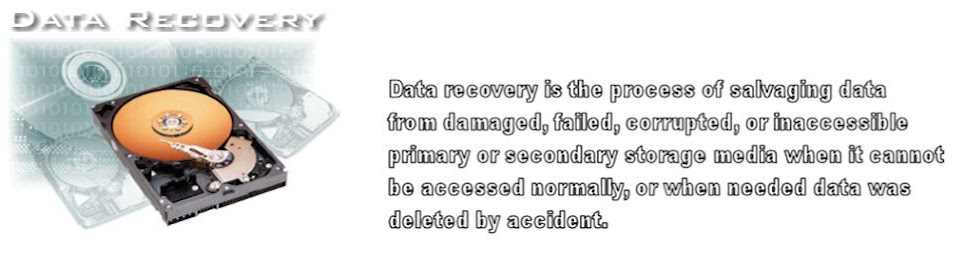
-Does your computer fail to bootup?
-Does your computer freeze and reboot?
-Cannot access your data due to the lost password?
-Does your computer contain critical data?
-Don't have a recent backup?
-Reformatted your harddrive?
-Accidentally deleted files?

Our blog will provide the relevant information on free tools, techniques, and approaches to recover your computer and get your valuable data back.

Showing posts with label windows xp repair. Show all posts

DiskInternals Boot CD

Create a bootable CD with Windows XP, 2003 or Windows Vista CD and a full set of DiskInternals recovery tools. Recover your hard drive by booting into familiar operating system with handy access to data recovery tools.

Computer crashes, data corruption and hard disk failures have happened to many computer users. Face computer emergencies armed with a backup plan! If your computer can’t boot from its hard disk, or if the disk contains damaged or deleted data just insert a recovery CD into a CD-ROM drive and reboot your computer.

Hey, wait! Does any CD work? Of course not! You have to create a data recovery CD to boot from before you can insert it into a CD reader. Create an emergency recovery disc with DiskInternals Boot CD!

DiskInternals Boot CD lets you boot into fully operational Windows XP-2003 or Windows Vista, complete with the GUI and service applications. To create your bootable Windows CD (WinPE, Windows Preinstallation Environment), download install DiskInternals Boot CD and run the Wizard. The Wizard will prompt you for a CD or DVD that contains Windows XP, 2003 or Vista setup files, and make a new bootable CD that can run Windows from an optical disk without installation.

What makes DiskInternals Boot CD really stand out is the fact that it comes with many data recovery tools dedicated to help you fix your system and your data as easy and fast as theoretically possible.

Accidentally deleted important documents? Stop your work immediately and boot from a CD immediately to maximize your chances to recover those files successfully. Don’t write anything to the disk that holds the deleted files, and don’t download anything from the Internet as the files you download can just overwrite the deleted data! The faster you boot your PC from DiskInternals Boot CD, the better your chances to get the files back are. Recover deleted files with DiskInternals Uneraser, or let Photo Recovery scan your hard drive specifically for deleted digital pictures.

Can’t access your hard drive because of boot record or file system failure? That’s a serious problem that often cannot be solved in any other way than booting from a CD. Restore access to corrupt partitions with DiskInternals Partition Recovery, and rebuild damaged file systems with DiskInternals NTFS Recovery and DiskInternals FAT Recovery tools. DiskInternals Partition Recovery recovers everything that can be recovered even if your disk becomes completely inaccessible and even physically damaged.

If you work in an office environment, your most valuable documents are stored in the Microsoft Office format. DiskInternals Office Recovery suite offers complete recovery for Microsoft Word and Excel documents. If you need either one of the two Office products, use DiskInternals Word Recovery or DiskInternals Excel Recovery respectively.

DiskInternals Boot CD is completely free, and it comes with a number of free recovery tools. You can use DiskInternals Boot CD with a computer that does not run Windows XP or Windows 2003 Server. Access and recover your Linux partitions with DiskInternals Linux Recovery and Linux Reader, or access NTFS file system with DiskInternals NTFS Reader on older Windows systems that don’t support NTFS at all.


DiskInternals Boot CD is a must-have tool for every system administrator and advanced computer user. Don’t let emergencies catch you unprepared! Create your own Boot CD to face the unexpected with confidence.

Note: Not all the software utilities are absolutely free to use. The Boot CD contains unlicensed trial versions of all the DiskInternals data recovery tools, ready to run from a convenient menu. You can find the most appropriate tool to recover your files. The file preview built into all the products lets you see that your data is recoverable before you need to buy a license.

Download your free copy of DiskInternals Boot CD at http://www.diskinternals.com/download.shtml#cd

How to use Safe Mode Option in computers repairs

Practical Uses for Safe Mode

If you are unable to start your system by using Last Known Good Configuration, Windows XP Professional, Windows 2000 and Windows Server 2003 provides safe mode, a startup option that disables startup programs and nonessential services to create an environment useful for troubleshooting and diagnosing problems. In safe mode, Windows XP/2000/2003 starts a minimal set of drivers that the operating system needs to function. Support for devices such as audio devices, most USB devices, and IEEE 1394 devices is disabled to reduce the variables that you need to account for when diagnosing the cause of startup problems, Stop messages, or system instability.

Logging on to the computer in safe mode does not update Last Known Good Configuration information. Therefore, if you log on to your computer in safe mode and then decide you want to try Last Known Good Configuration, the option to do so is still available.

Essential drivers and system services enabled in safe mode include the following:

  • Drivers for serial or PS/2 mouse devices, standard keyboards, hard disks, CD-ROM drives, and standard VGA devices. Your system firmware must support universal serial bus (USB) mouse and USB keyboard devices in order for you to use these input devices in safe mode.
  • System services for the Event Log, Plug and Play, remote procedure calls (RPCs), and Logical Disk Manager.
When do you need to use Safe Mode

Enabling only components needed for basic functionality allows the operating system to start in the following situations:
  • The computer consistently stops responding: You can restart the operating system in safe mode and use the tools described in this appendix to diagnose and resolve problems.
  • The computer starts with a blank or distorted video display: You can start your computer in safe mode and then use Control Panel to select video adapter settings that are compatible with your monitor. New settings take effect when you restart the computer.
  • The computer does not start normally after you install new hardware or software: If recently installed hardware or software prevents you from starting Windows XP Professional in normal mode, you can use safe mode to uninstall software, or to remove or roll back device drivers.
  • The computer is infected with virus or Trojan, which is residing in the system configuration. Since Windows use the files considering them as essential part of the normal system configuration, you are not able to clean or get rid of them. The files and drivers that are considered “in use” by operating system are blocked from any accidental or intentional modifications. So, Many forms of malicious software will protect or reinstall themselves constantly if they are allowed to start in the first place. These programs will situate themselves in one of the many autorun locations in the Windows registry and file structure. When Windows is started normally, so is the offending software, running as a process in the background. When you start the PC in Safe Mode, these autorun locations are not used, and no software is started automatically. This can allow virus and spyware removal programs the opportunity they need to remove the malicious software completely. If you are having virus or spyware problems on your PC, you should always run antivirus and anti-spyware programs in Safe Mode to ensure that they have maximum effect.
Safe mode helps you diagnose problems. If a symptom does not reappear when you start in safe mode, you can eliminate the default settings and minimum device drivers as possible causes. If a newly added device or a changed driver is causing problems, you can use safe mode to remove the device or reverse the change.

There are circumstances where safe mode will not be able to help you, such as when Windows system files that are required to start the system are corrupted or damaged. In this case, the Recovery Console may help you.

Safe Mode also bypasses startup programs. Bypassing startup programs reduces system complexity and enables you to see whether a startup program is the source of the problem.

In safe mode, the operating system does not run network-based startup programs. To enable network logon scripts in safe mode, select Safe Mode with Networking on the Windows Advanced Options Menu.

How to start your computer in safe mode
  1. Remove all floppy disks and CDs from your computer, and then restart your computer.
  2. When prompted, press F8. If Windows XP Professional starts without displaying the Please select the operating system to start menu, restart your computer. Press F8 after the firmware POST process completes, but before Windows displays graphical output.
  3. From the Windows Advanced Options Menu, select a safe mode option listed in the following list:
  • Safe Mode (SAFEBOOT_OPTION=Minimal): This option uses a minimal set of device drivers and services to start Windows.
  • Safe Mode with Networking (SAFEBOOT_OPTION=Network): This option uses a minimal set of device drivers and services to start Windows together with the drivers that you must have to load networking.
  • Safe Mode with Command Prompt (SAFEBOOT_OPTION=Minimal(AlternateShell)): This option is the same as Safe mode, except that Cmd.exe starts instead of Windows Explorer.
  • Enable VGA Mode: This option starts Windows in 640 x 480 mode by using the current video driver (not Vga.sys). This mode is useful if the display is configured for a setting that the monitor cannot display.
    Note Safe mode and Safe mode with Networking load the Vga.sys driver instead.
  • Last Known Good Configuration: This option starts Windows by using the previous good configuration.
  • Directory Service Restore Mode: This mode is valid only for Windows-based domain controllers. This mode performs a directory service repair.
  • Debugging Mode: This option turns on debug mode in Windows. Debugging information can be sent across a serial cable to another computer that is running a debugger. This mode is configured to use COM2.
  • Enable Boot Logging: This option turns on logging when the computer is started with any of the Safe Boot options except Last Known Good Configuration. The Boot Logging text is recorded in the Ntbtlog.txt file in the %SystemRoot% folder.
  • Starts Windows Normally: This option starts Windows in its normal mode.
  • Reboot: This option restarts the computer.
  • Return to OS Choices Menu: On a computer that is configured to starting to more than one operating system, this option returns to the Boot menu.
To highlight the Safe Mode operations on Windows versus normal operation, user gets the initial disclaimer on the special conditions of running computer in Safe Mode, and the Safe Mode markers are present all the way on the corners of your screen.


Use Msconfig to get to Safe Mode

If you only want to enter Safe Mode occasionally and have trouble using the F8 key, you can use the System Configuration Utility (msconfig). Go to Start|Run and enter “msconfig” (without quotes). When the utility opens, click on the tab BOOT.INI as shown in the figure below.


Highlight the operating system listed in the section [operating systems] as shown in the figure below. Next put a check by the entry /SAFEBOOT as shown below. Also click the radio button MINIMAL Then reboot. The system should open in Safe Mode. When finished using Safe Mode, open Msconfig again and remove the check by /SAFEBOOT. Otherwise, you will continue to open in Safe Mode whenever you boot.

How to start your computer normally after using Safe Mode

  1. Shut down the computer and allow it to restart
  2. By default, it will start in Normal Mode
Sources and Additional Reading:
http://www.petri.co.il/safe_mode_in_windows_2000_xp_2003.htm
http://support.microsoft.com/kb/315222
http://www.computer-2tr.com/tips/05/20050113.html
http://vlaurie.com/computers2/Articles/safemode.htm

Built-in Recovery and Troubleshooting Options in Windows XP

What recovery and troubleshooting options do I have in Windows XP?

Software and hardware issues can affect the way that your system functions. Severe problems might prevent you from starting Windows XP Professional normally.

  • Software problems: Installing incompatible software, incorrectly changing system configuration settings, or installing faulty device drivers can cause system instability or a Stop error.
  • Hardware problems: Hardware that is defective, malfunctioning, incorrectly installed, or incorrectly configured can also cause instability or a Stop error.
  • Other problems: Deleted or corrupted system files caused by problems such as user error or virus activity can cause data loss or prevent you from starting the operating system.
Any of the preceding types of problems can prevent you from starting Windows XP Professional in normal mode, causing certain applications or data to become inaccessible. Windows XP Professional provides several tools that enable you to troubleshoot startup and stability problems, and restore system and data files. the following list lists these tools according to the preferred order of use, from tools that present little or no risk to data, to those that might cause data loss. With the exception of the Automated System Recovery (ASR) restore phase, Last Known Good Configuration, and Recovery Console, the features in the table are available in safe and normal startup modes. If the following tools and features do not resolve the problem, and you upgraded your system from an earlier version of Windows, you might have the option to uninstall Windows XP Professional.

Last Known Good Configuration
A startup option to use when the system cannot start in normal or safe mode following a driver or application installation that causes a problem. By using the Last Known Good Configuration, you can recover by reversing the most recent driver and registry changes made since you last started Windows XP Professional.

Device Driver Roll Back
A Device Manager feature that allows you to replace an individual device driver with the previously installed version if the driver was updated after you installed Windows XP Professional. Device Driver Roll Back is available in normal or safe mode.

System Restore
A service for x86-based computers that actively monitors your system and records changes to the registry, to system files, and to certain application files. System Restore allows you to undo recent registry and file changes by using information previously saved in restore points. Use to restore the system to a previous state. System Restore is available in normal or safe mode.

Add or Remove Programs in Control Panel
A Control Panel feature you can use to uninstall programs. Use to temporarily uninstall software that you suspect is causing a problem. You can uninstall an application in normal or safe mode.

Safe Mode
If you are unable to start your system by using Last Known Good Configuration, Windows XP Professional provides safe mode, a startup option that disables startup programs and nonessential services to create an environment useful for troubleshooting and diagnosing problems. In safe mode, Windows XP Professional starts a minimal set of drivers that the operating system needs to function. Support for devices such as audio devices, most USB devices, and IEEE 1394 devices is disabled to reduce the variables that you need to account for when diagnosing the cause of startup problems, Stop messages, or system instability.

Recovery Console
A command-line environment that you can use to perform advanced troubleshooting operations. In addition to Last Known Good Configuration and safe mode, advanced users can use Recovery Console to attempt manual recovery operations.

Backup
A tool for saving data, such as the system state, before you troubleshoot problems, attempt workarounds, or apply updates. Backup (Ntbackup.exe) enables you to restore system settings and data if your troubleshooting attempts worsen the problem. Use in conjunction with a parallel installation to restore a system that cannot start in normal or safe modes. Backup is available in safe or normal mode.

Automated System Recovery (ASR)
A Backup (Ntbackup.exe) option to use when boot and system files become corrupt, preventing your system from starting in normal or safe modes, or using Recovery Console. This option is more desirable than formatting disks and reinstalling Windows because ASR restores system settings and critical files on the system and boot partitions.

The user interface to ASR backup is the ASR wizard in Backup, which steps you through the process of creating an ASR backup set and an ASR floppy. Windows XP Professional Setup provides the user interface to ASR restore.

Because the ASR process formats disks, consider this a last resort when using Last Known Good Configuration, Device Driver Roll Back, System Restore, or Recovery Console does not solve the problem. ASR is available in safe or normal mode.

Source: http://www.petri.co.il/recovery_and_troubleshooting_options_in_windows_xp.htm

Data Recovery Techniques © 2008. Template by Dicas Blogger.

TOPO