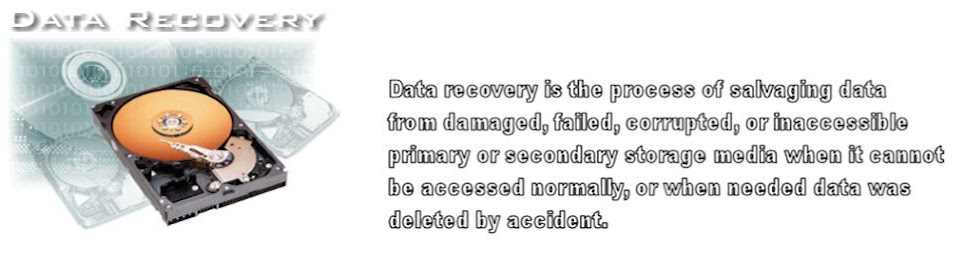
-Does your computer fail to bootup?
-Does your computer freeze and reboot?
-Cannot access your data due to the lost password?
-Does your computer contain critical data?
-Don't have a recent backup?
-Reformatted your harddrive?
-Accidentally deleted files?

Our blog will provide the relevant information on free tools, techniques, and approaches to recover your computer and get your valuable data back.

Showing posts with label computer defrag. Show all posts

Freeware Portable Defragmenter JkDefrag and its Clones

About JkDefrag

JkDefrag is a disk defragmenter and optimizer for Windows 2000/2003/XP/Vista/2008/X64. Completely automatic and very easy to use, fast, low overhead, with several optimization strategies, and can handle floppies, USB disks, memory sticks, and anything else that looks like a disk to Windows. The presented Windows version is intended for Harddrives only. For defragmentation of floppy disk and removable media you need use command line version that can be downloaded from the author’s website. Add the appropriate drive letter to the end of the command path or else JkDefrag automatically will skip these.

Note: Just a side note that there is no big advantage in defragmenting USB drives due to the random data access. Furthermore, there were several warnings from the USB drives manufacturers, that the defragmentation process might harm the USB drive structure.

Cost

JkDefrag is completely free, no cost, no time limit. The executables are released under the GNU General Public License.

Installation

There is no "setup" or "install" and no configuration file. All you have to do is download the zip and unpack anywhere you like. The program is ready to run and will automatically process all the mounted, writable, fixed volumes on your computer. It is correct - you just start the program, and it will proceed with disks defragmentation even without pressing start button.

Permissions

JkDefrag needs "full control" permissions to all files and disks that it must defragment/optimize. On a default Windows system the "administrator" userid has full permissions to all files and disks. Users with no administrator privileges can also run JkDefrag, but then it can only defragment/optimize the files and disks for which the user has "full control".
Note: On Vista right-click the JkDefrag program and select "run as administrator".


Stopping

JkDefrag can be stopped safely at any time, there is no risk of losing data or corrupting your disk. You can use all the usual ways to stop a Windows program, such as pressing ALT-F4, clicking the ’x’ in the top-right corner, via the pull-down menu in the taskbar, or by killing the program via the task manager or another utility. It may take a bit of time for the program to actually stop, JkDefrag will finish the current file in the background.

Logfile

JkDefrag writes all messages to a logfile called "JkDefrag.log". You can inspect the logfile if you want, it’s a flat-text file. The logfile is automatically cleared when the program starts, it does not grow to infinity.

Tips:

1. Cleanup old junk from your harddisk before running JkDefrag, for example with "Start -> Programs -> Accessories -> System Tools -> Disk Cleanup", or with some freeware program.

2. Reboot before running JkDefrag. This will release files that are in use, so they can be defragmented. You can also run JkDefrag in Windows safe mode (press F8 while booting) to defrag even more files.

3. Stop your real time virus scanner before running JkDefrag. Virus scanners check all disk activity, making defragmentation and optimization very slow.

4. Move the swap file to another volume, reboot, defragment, and move the swap file back. If you don’t have a second volume then temporarily make the swap file small, for example 100Mb.

5. If an application (for example a database) prevents certain files from being defragmented then stop the application, run JkDefrag for the particular data directory only, and restart the application.

6. Package unused files with any packager. The package-file not only takes less harddisk space, but will also defragment and optimize much faster than the individual files. This does not apply to Windows NTFS compression, which will actually make defragmentation and optimization a lot slower.

7. Buy the biggest harddisk you can afford. Investing in a bigger harddisk gives more speed-per-dollar than investing in a faster CPU or more memory.

8. The first partition on a harddisk is significantly faster than other partitions. Try to use other partitions only for "SpaceHog" data.

9. If you have 2 physical harddisks (of the same speed), then place the pagefile on the first partition of the second harddisk.

Website: http://www.kessels.com/JkDefrag/

As you might notice, the interface is simple and basic. There are power users, who prefer having more power of using the program, while having the Windows interface instead of command line. For them, I can offer JkDefragGUI freeware utilities.

JkDefragGUI is a Graphical User Interface which allows you to easily select all the features JkDefrag. But is can do a lot more. JkDefragGUI can schedule a defragmentation, install JkDefrag or it’s screensaver but can also do some small maintenance to your computer. It can be used to schedule a defragmentation of your system files like pagefile and registry files. JkDefragGUI also supports CCleaner which can be used instead of the internal cleaning function. It can also erase any information which is left behind on your hard disk after erasing files. JkDefragGUI was created for people who don’t have the skills of an advanced user but still want to use the powerful features JkDefrag has to offer or for those people who like a GUI instead of using the command line. JkDefragGUI is compatible with Windows 2000, Windows XP, Windows Vista, Windows 2008, U3 capable flash memory and with BartPE pre-installed environment.

Website: http://www.emro.nl/freeware/

Author: Emiel Wieldraaijer

There is one more utility with the same name JkDefragGUI, resolving the task to bring more visibility to multiple options of the basic JkDefrag. This utility is portable as well and supports many languages. Standard package include 10 languages, but you can download extra multi-language packages for additional 40 languages.

Website: http://jkdefrag.8qm.de/english.php#1

Author: Markus Hörl

And for the users, who are in favor of the AIO (all-in-one) bundles, there is another utility, combining all vital system management utilities under one roof. ScanDefrag is a small windows application that configures Microsoft’s, Norton’s, or JKessel’s disk utilities as part of the next Windows’ startup process. This can result in less restarts and cleaner runs of these programs. ScanDefrag Standard allows performing scheduled system maintenance using:

  • Microsoft’s Disk Cleanup
  • Microsoft’s ScanDisk/ChkDsk or Norton’s Disk Doctor
  • Microsoft’s Defragmenter, Norton’s SpeedDisk, or Jeoren Kessels’ Defragmenter
Note that this software is not portable, and requires installation on your PC. However, it is packed with several utilities, which are considered the best in their categories, so for many users it might be considered as comprehensive preferable solution.

Website: http://www.blueorbsoft.com/scandefrag/

How to Optimize Computer Performance with Hard Drive Defragmentation?

Hard Drive Performance Optimization

Windows comes with a collection of house cleaning tools, including ScanDisk, Disk Defragmenter and Disk Cleanup, to help keep your disk in peak working order.

Why should you bother with the housework? A couple of reasons. First, disks are hard working, mechanical devices and, like all mechanical devices, prone to failure. A little preventative maintenance can warn you of potential problems and fix minor glitches before they can do damage to your data.

Second, the way files are organized on your drive has a perceptible impact on the performance of your computer. If your files are stored neatly, end-to-end, without fragmentation, reading and writing to the disk is speedier.

What is file fragmentation?

Sometimes when you install a program or create a data file, the file ends up chopped up into chunks and stored in multiple locations on the disk. This is called fragmentation.

What makes this happen?

When you first install your operating system and programs on your hard disk, they are written to the disk, for the most part, in one contiguous block without any gaps. The exceptions are certain system files that must be stored in specific locations. Over time, as you create and then delete documents or uninstall programs, once-filled locations are left empty and you end up with files dotted all over the disk.

Now, when Windows is writing a file to the disk, it looks for a suitable piece of free space in which to store it. What happens, then, when you copy a 40 MB database or audio file to the disk and the biggest slice of free space is only 30 MB? Or say you modify an existing file, appending a whole bunch of data so the file now takes up more space on the disk. To accommodate the files, Windows writes the first part of the file in one section of the disk and then scouts around for other places to store the rest of the file. The end result is that a single file may be stored in several chunks scattered about the disk.

Of FAT and files

Windows keeps track of each file’s location in the File Allocation Table, or FAT (Windows 98 and Me use a file system called FAT32). When your file is written to disk, FAT32 provides Windows with the address of an unoccupied disk cluster. FAT32 also tells Windows on which disk sectors it will find that cluster; that is, it provides the physical location of the cluster. This information is used by your PC’s BIOS (the Basic Input/Output System) to direct the actual disk writing operation.

If the file is too large to fit in a single cluster, Windows asks FAT32 for another vacant cluster, and another, and another until the whole file is written to disk. If you have lots of free clusters side by side, FAT32 can point Windows to an adjacent series of clusters, resulting in a file which occupies one contiguous chunk of the disk. If no adjacent cluster is available, FAT32 tracks down a space elsewhere on the disk and tells Windows to put the next bit of the file there; and so on until the full file is written to disk.

A record of the clusters used for storing the file is kept by FAT32 so Windows can find the file once more when you want to read it.

The fragmentation penalty

Although this all happens quickly, it makes a lot of work for your hard disk. Its read/write head, which moves across the drive platter from location to location transferring data, has to zip all over the place when saving or opening a single highly fragmented file. (By the way, many disks have more than one read/write head and multiple platters.) If a file is unfragmented, the disk head moves to one location, reads the file in one sequential swoop, and that’s it.

A file stored in, say, four fragments, can easily take twice as long to open as the same file unfragmented, although the actual performance hit you take is affected by other factors, including the total size of the file.

The techniques used by the Disk Defragmenter

# Moving all the index or directory information to one spot. Moving this spot into the center of the data, i.e. one third of the way in, so that average head travel to data is halved compared to having directory information at the front.
# Moving infrequently used files further from the directory area.
# Obeying a user provided table of file descriptions to emphasize or ignore.
# Making files contiguous so that they can be read without unnecessary seeking.

Windows XP Disk Defragmenter Limitations

Disk Defragmenter in Windows XP has the following MAJOR limitations:
# It does NOT defragment files residing in the Recycle Bin.
# It also cannot defragment "in-use" files.
# Does not defrag and clean the registry.
# It can defragment only local volumes.
# It can defragment only one volume at a time.
# It cannot defragment one volume while it is scanning another.
# It cannot be scheduled automatically. If you need to schedule disk defragmentation, use the Defrag.exe command line tool.

Defragment Your Disk Drive Volumes in Windows XP

Disk Defragmenter Microsoft Management Console (MMC) is based on the full retail version of Executive Software Diskeeper. The version that is included with Windows XP and later provides limited functionality in maintaining disk performance by defragmenting volumes that use the FAT, FAT32, or NTFS file system.
To start Disk Defragmenter MMC, use one of the methods.

Method 1: Use the Properties of Your Local Disk

  1. Open My Computer.
  2. Right-click the local disk volume that you want to defragment, and then click Properties.
  3. On the Tools tab, click Defragment Now.
  4. Click Defragment.
  5. If you have more than one hard disk, repeat this process for each hard disk listed.
Method 2: Use Computer Management MMC
  1. Start Computer Management MMC (Compmgmt.msc).
  2. Click Disk Defragmenter.
  3. Click the volume that you want to defragment, and then click Defragment.
Method 3: Use Disk Defragmenter MMC.
  1. Start Disk Defragmenter MMC (Dfrg.msc).
  2. Click the volume that you want to defragment, and then click Defragment.
It May Take a While

The Disk Defragmenter tool can take anywhere from minutes to hours to run, depending on the size of your hard drive and also how fragmented the drive is. One way to run the Disk Defragmenter and not lose any computing time is to leave the system and run the Disk Defragmenter during a time when the system can be left on but is not be in use (e.g., 3 or 4 a.m.). You can simply use the steps above to launch Disk Defragmenter when your computing tasks are done for the day or you can have the Windows Task Scheduler automatically run the Disk Defragmenter on a certain day and time each week or month.

Tips for Getting the Best Results

  • Ensure you have no applications running when you start the Disk Defragmenter. If you system is accessing applications the Defragmenter will not stay running. Be sure to turn off your screensaver also.
  • Delete your Temporary Internet Files and other files you do not use. You can also uninstall unused programs. In the Properties tab of your hard drive you can access "Disk Cleanup," which will help you get rid of unused and unnecessary files.
  • Run the Disk Defragmenter at regular intervals. However you can also run the tool if you add a lot of files to the disk at one time or find you are running low on disk space.
  • The volume must have at least 15% free space for Defrag to completely and adequately defragment it. Defrag uses this space as a sorting area for file fragments. If a volume has less than 15% free space, Defrag only partially defragments it.
Automatic Defragmentation Scheduling with Task Scheduler

  1. Open Control Panel, double-click Scheduled Tasks
  2. Double-click Add Scheduled Task
  3. On the Scheduled Task Wizard dialog, click Next.
  4. Click Browse and navigate to windows’system32 folder. Select defrag.exe and click Open. In the Scheduled Task Wizard dialog, type a name for the scheduled task (for example type Disk Defrag).
  5. Under Perform this task, select how often you wish Disk Defragmenter to run. Click Next.
  6. Set the time at which you wish the Disk Defragmenter scheduled task to run. This should be a time when your computer is turned on but not under heavy use (i.e. at night time). Select the frequency at which you want the Disk Defragmenter task to run (Every Day, Weekdays, or Every <N> days, where <N> is the number of days between scheduled runs). Click Next.
  7. Enter a user name under which the Disk Defragmenter scheduled task will run. This user must be an administrator on the local machine (see note above). Enter the password for that user and confirm it. Click Next.
  8. Check Open advanced properties for this task when I click Finish, and click Finish.
  9. In the Run text box, you can see the full path and command for defrag.exe.  Add the drive letter for the drive you wish to defragment to the command in the Run text box. If you want to defragment drive C:, your Run command should look like this: C:’WINDOWS’SYSTEM32’defrag.exe C: Click OK.
  10. In the Set Account Information dialog, enter and confirm the password for the user listed in Run as and click OK.
  11. Task Scheduler will automatically run Disk Defragmenter with the settings you selected at the time you selected.
Only one instance of Disk Defragmenter can be running at any given time. If you have multiple partitions you’ll need to add a separate scheduled task for each one, and make sure you give each task a different starting time, allowing for the previous one to finish.

Defrag Your Boot Files

File fragmentation can happen at start-up too. A real power tip (not for beginners) is to have Windows XP automatically defragment these files, but you will have to make sure your Windows XP registry has the correct setting.

Open your Registry Editor and go to key:
HKEY_LOCAL_MACHINE’SOFTWARE’Microsoft’Dfrg’BootOptimizeFunction
Look for a VALUE in the right hand pane called BootOptimizeFunction
...if it does NOT exist, choose from the menu Edit > New > String Value and create it.
Make sure that it has the entry Y.


Sources and Additional Information:
http://www.geekgirls.com/windows_defrag.htm
http://support.microsoft.com/kb/314848
http://www.webopedia.com/DidYouKnow/Computer_Science/2008/disk_defragmentation.asp
http://www.petri.co.il/schedule_disk_defrag_to_run_automatically_in_windows_xp_2003.htm
http://www.updatexp.com/disk-defragmenter.html

Data Recovery Techniques © 2008. Template by Dicas Blogger.

TOPO